
Family Engagement: Capacity Outcomes
How MTSS Supports Family-School Partnerships
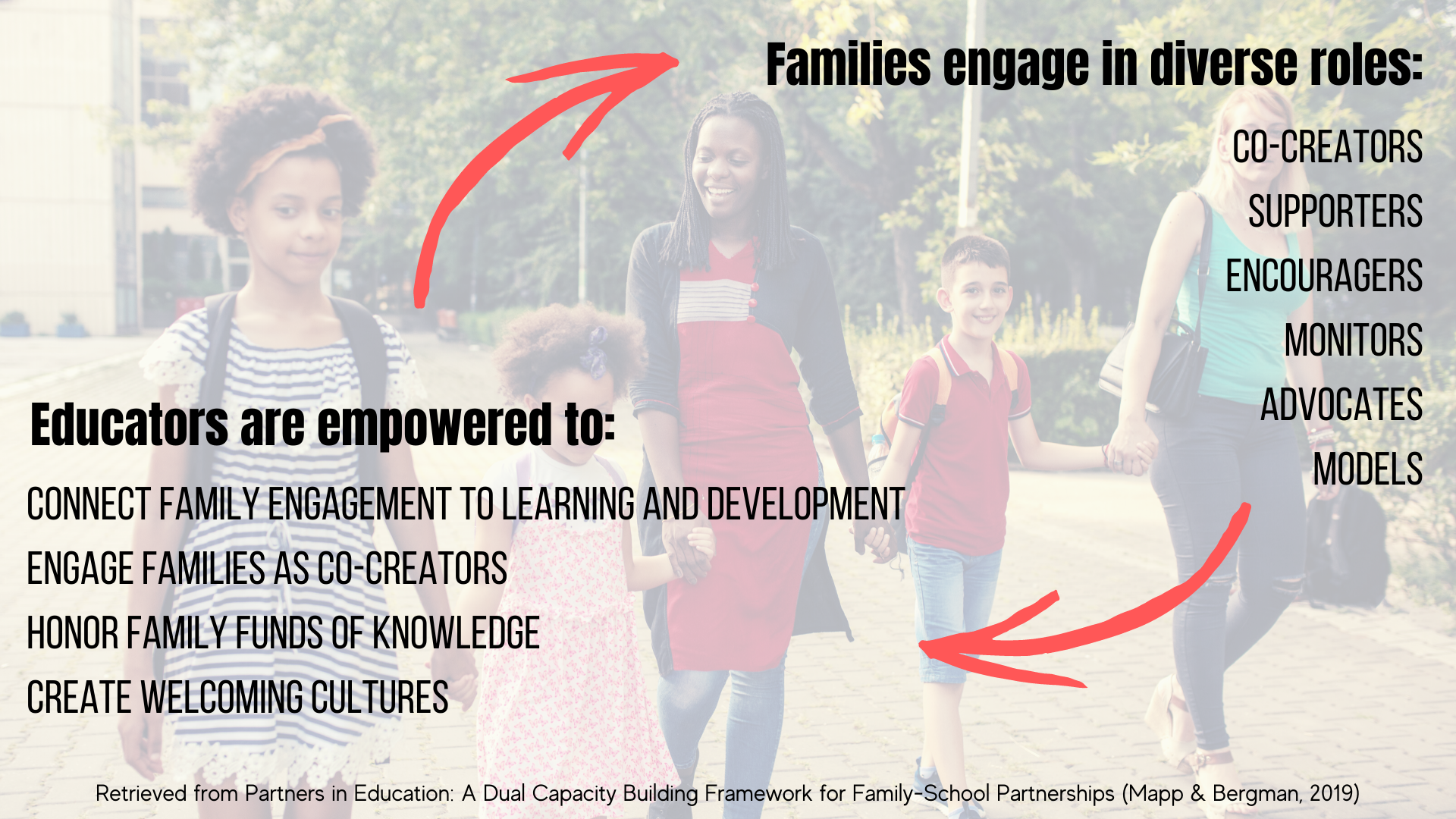
When staff and families build capabilities, connections, confidence, and cognition, they can engage in partnerships that support student learning. Meeting Essential Conditions and establishing Policy and Program Goals empowers families and educators to collaborate effectively.
MTSS Support Across Tiers
- Communicate the school's commitment to prevention and interventions, using clear language, translation, and multiple channels. Ensure equitable access to all families.
- Share Tier 1 supports and screening information to build family understanding. Present data transparently to help families interpret results.
- For Tier 2, explain the interventions, targeted skills, delivery methods, and progress monitoring. Tap into families' knowledge and expertise.
- For Tier 3, involve families in the Data-Based Individualization process. Families’ insights guide intensive supports.
Effective family-school partnerships enable shared decision-making, co-creation of programs, and improved student and school outcomes.

Policy and Program Goals
Refresher on setting goals and measuring the effectiveness of the family-school partnership.
Policy and Program Goals
Putting Research Into Practice
Resources for schools and districts to increase family engagement.
Research Into Practice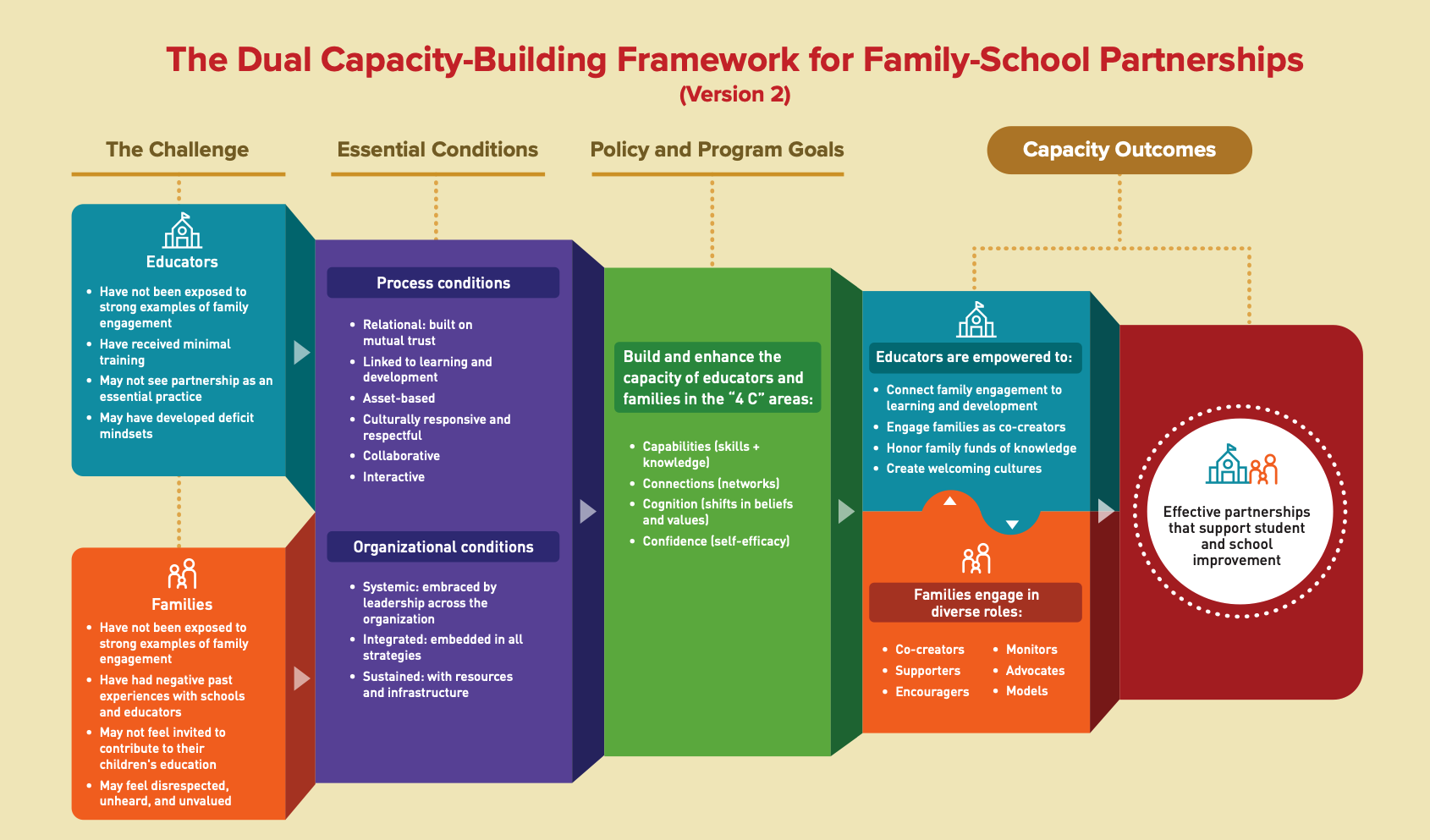
The Framework
Resources on linking family and community engagement to student and school improvements.
The Framework1 From the United States Department of Education. Mapp, K. L., & Kuttner, P. J. (2013). Partners in Education: A Dual Capacity-Building Framework for Family-School Partnerships. Available from https://www2.ed.gov/documents/family-community/partners-education.pdf; accessed 10 February 2021.
2 From Mapp, K.L. & Bergman, E. (2019). Dual capacity-building framework for family-school partnerships (Version 2). Available at www.dualcapacity.org.